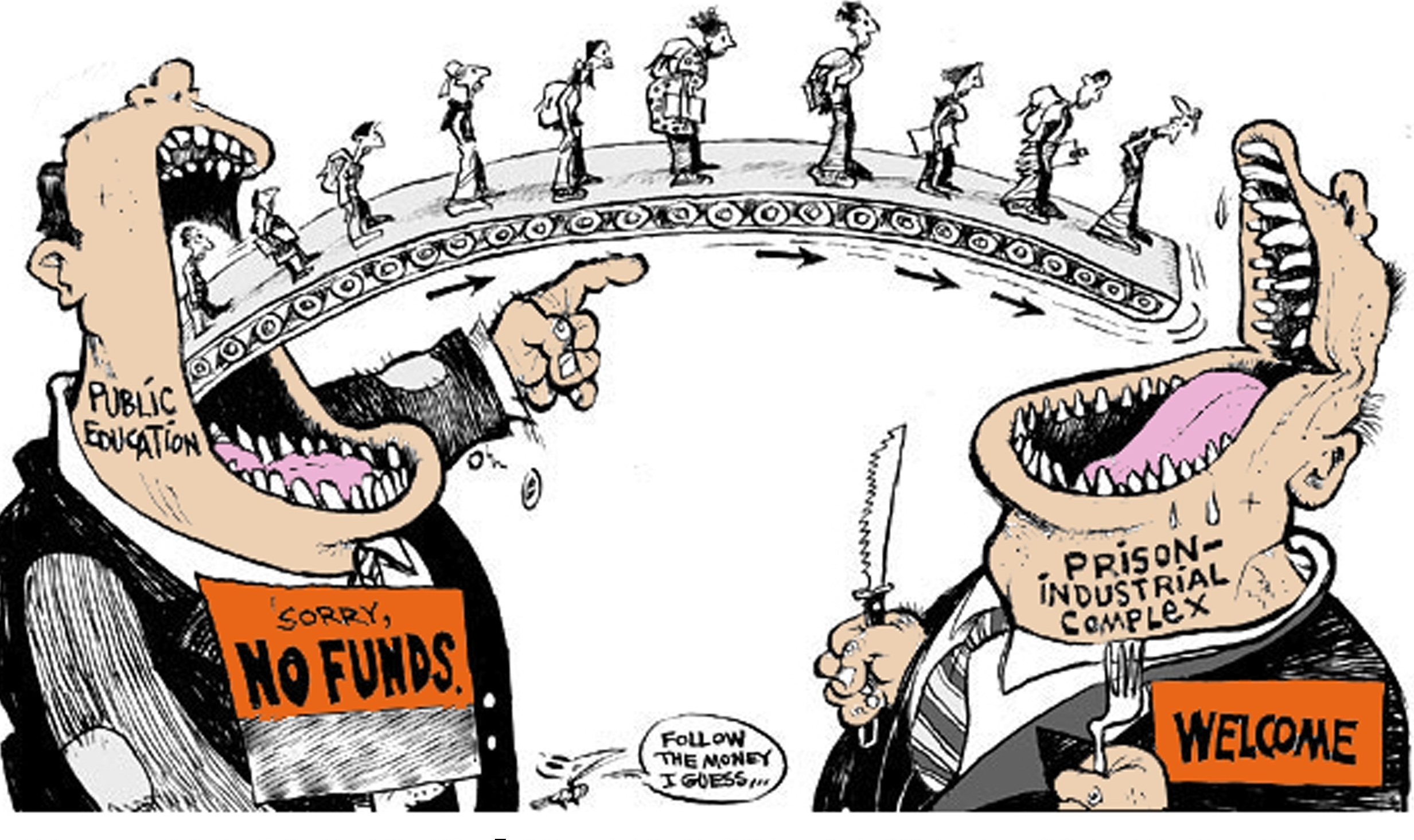
Reasons African-Americans May Want To Homeschool: To Keep Them Out Of The School To Prison Pipeline

Photo Source: suspensionstories.com

Photo Source: suspensionstories.com

Proverbs 20:23 – Unequal weights are an abomination to the LORD, and false scales are not good.

I think this video sums things up in less time it would take me to type up a post.

However, I’ll just say that personally, I’ve witnessed this long before I ever knew about “The Pipeline”.

In my suburban high school, our basketball team got into a major parking lot brawl with another suburban high school. Cops were called, no one went to jail, and guys were bragging about the action the next day in school.

Fast forward a few years…my brother was attending a high school in the city. He got involved in a food fight in the cafeteria. School staff broke up the fight, called the police, and my parents got the call to pick him up from jail. The story didn’t end there, as he later had a court case (ironically held in our neighborhood middle school with a bunch of other school “court” cases), and had to have his recruiter vouch for him that he was a “good kid” and would soon be in the military, so don’t punish him.

Perhaps his biggest crime was not getting into a fight when he went to a school in the ‘burbs instead.

CSD

CSD Greatest Day Ever: Attending Lecture By James W. Loewen With My Couple Members Of My Crew

It was one of those GDEs (Greatest-Day’s-Ever).

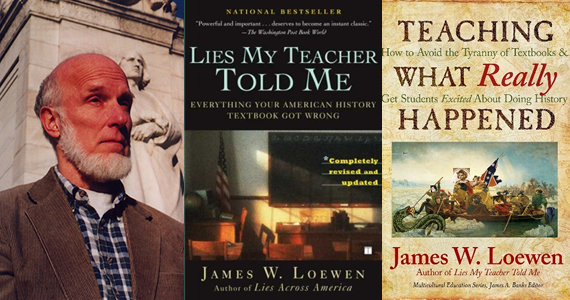
It’s not often in life where you can meet the people who have written your academic textbooks, but my kids had just that opportunity as we attended a lecture with James Loewen. This is why I love homeschooling, and we’ve followed Loewen since I first heard about his book, Lies My Teacher Told Me.

This outing was perfect for me this week as my German colleague and I had a great time discussing history and compared a few interesting things about our countries.

1.) He noted that Germany has always taught its citizens about the Holocaust in an effort to acknowledge past sins and they have a desire never to see such a horrible atrocity happen again. I told him that I have a history book that I bought to use as a supplemental text this last year and there is no mention of slavery. The majority of people in this country know very little about the institution of slavery beyond its existence and could care less.

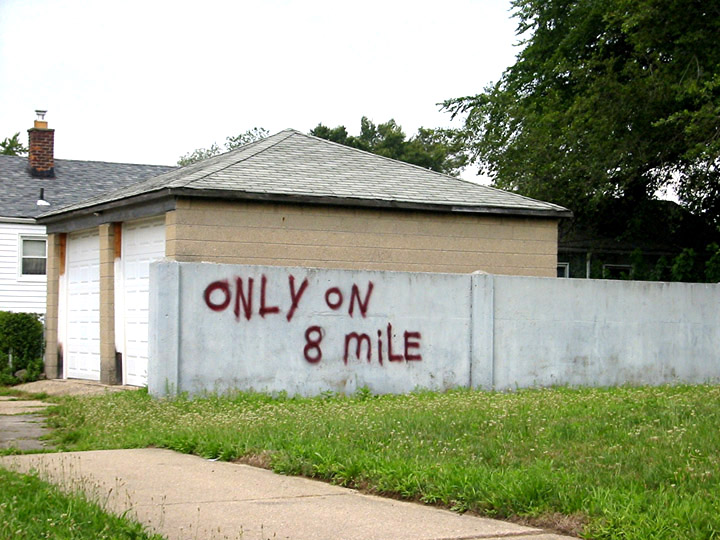
2.) Speaking of silence, Detroit had its version of the Berlin Wall as well. The  “Detroit Race Wall” was created to be a physical barrier dividing whites and blacks. As an NPR story noted, “”And the developer who wanted to develop in this area was told no by the FHA,” Horner says. “Because it was considered to be too close to an African-American neighborhood. And so the solution that the developer came up with was to build a 6-foot-high wall that runs for about three long city blocks.” This truly was a symbol of Jim Crow North.

wall_old02_slide-6e07d4aff8a491d86f5900531cca1d39da805ae8-s6-c30

3.) Loewen has also done extensive research on Sundown towns. Sundown-towns required blacks to be out of town or face death by, you guessed it, sundown. Loewen told civilrights.org, “Well, the suburbs were all white for sundown policies, and this is clear after you read my book. So maybe there is some way to go after that decision and get it re-adjudicated. Certainly, that decision has left Detroit and the Detroit metropolitan area screwed to this day. And Detroit is the most segregated metropolitan area, it has the most downtown abandonment, and it had until the last five years the most sundown towns. Many of them have just recently broken and black folks can now live safely in at least three of the five Grosse Points, for instance, and in Dearborn, and in some of the others. But the damage has been done over the last several decades.” – http://www.civilrights.org/resources/bookclub/loewen-interview.html

There were actually MORE Sundown Towns in the north, than in the south! Source: Tolerace.org

There were actually MORE Sundown Towns in the north, than in the south! Source: Tolerace.org

4.) Loewen made dad right. CSD’s, you have to love that! He spoke of the importance of talking to people in order to find out real history. Young people today are far more text-savvy than they are book-savvy. Performing original research and interviews is becoming a lost skill, but it is vital in finding out the truth that (unlike Germany) our country has determined to suppress and modify in an effort to maintain a system of white supremacy. I’ve encouraged all of you to talk to your parents and friends about your past and race relations, because whether you realize it or not, it has shaped you. That past has shaped Detroit and if you live or lived in Michigan, Detroit shaped you.

only on 8 mile

It was truly a great night and the only down-side…my daughter didn’t bring the book so we could get it signed!

Oh well, it was still the Greatest Day Ever.

You can find out more about James Loewen at:

http://sundown.afro.illinois.edu/liesmyteachertoldme.php

CSD Dinner Table Topic of the Day: College, Student Loans and 21st Century Sharecropping

Definition of SHARECROPPER

: a tenant farmer especially in the southern United States who is provided with credit for seed, tools, living quarters, and food, who works the land, and who receives an agreed share of the value of the crop minus charges
Source: http://www.merriam-webster.com/dictionary/sharecropper
share36s

When I graduated high school, I remember people who didn’t go to college saying, “I know people with college degrees that make less than I do and I didn’t go to college!”

Now, I’ll be one of the folks telling high school grads, “I went to college and got a degree and I make more money than average, but I’m still poorer than most people who didn’t go to college!”

“Under this system, black families would rent small plots of land, or shares, to work themselves; in return, they would give a portion of their crop to the landowner at the end of the year.

The sharecropping system also locked much of the South into a reliance on cotton, just at the time when the price for cotton was falling. In addition, while sharecropping gave African-Americans autonomy in their daily work and social lives, and freed them from the gang-labor system that had dominated during the slavery era, it often resulted in sharecroppers owing more to the landowner (for the use of tools and other supplies, for example) than they were able to repay. Some blacks managed to acquire enough money to move from sharecropping to renting or owning land by the end of the 1860s, but many more went into debt or were forced by poverty or the threat of violence to sign unfair and exploitative sharecropping or labor contracts that left them little hope of improving their situation.”

Source: http://www.history.com/topics/sharecropping

At the current rate, over the next few decades, we will likely return back to a time when only the affluent can afford a college education and those who previously had earned a college degree, will not be able to afford to send their own children to school and will be paying student loan payments out of their social-security checks.

“Forget hitting the books son, better go dribble that basketball or throw that football to get a scholarship!”

students-loans2

Oh, and before someone comments, “Well, if you can’t afford to pay for a college degree, then you shouldn’t get a loan to pay for one!”

As a Dave Ramsey fan, I agree.

So surely you don’t have any credit cards, a car note or a mortgage right? Because if you can’t pay cash for a house, then why should you feel entitled to get a loan to buy a home. After all, the amount many owe in student loan debt equals what they would pay for a home.

Also, I’ll agree more with that statement when our student loan debt is seen as “too big to fail” like the banks that loaned the money, and maybe it can just be wiped off the books.

…just like the folks that walked away from their houses when they bought more than they should have when those loans were flowing like water.

Quite honestly, college is still the best option for the young and old. However, my gripe is with the “wisdom” that getting the education is a guarantee to a great paying job, home ownership, and “you’ll make much more money than your peers that didn’t go to college over your lifetime.”

Well, none of those are absolute truths.

But you better be absolutely sure what you want to major in, how much does it pay in the end and know exactly what you can pay off. Because while the banks that loaned you the money are too big to fail, you aren’t…and you can’t file bankruptcy on student loan debt like they can!

Check out this article from blog.metrotrends.org

With national student loan debt of roughly $1 trillion, it’s no surprise that many Americans are worried about their student loans.

Student loan debt has surpassed credit card debt and is second only to mortgage debt among those age 29-37. This ballooning student loan debt is a contributor to the “lost generation” of 20- and 30-somethings, whose average wealth is lower than the average wealth of those in their 20s and 30s three decades ago.

We published a new brief on school-related debt, using the FINRA Investor Educational Foundation’s 2012 National Financial Capability Survey. One in five adults age 20 and older has school-related debt and concern about the ability to repay is pervasive. The majority of student debt holders (57 percent) is worried that they may be unable to repay that debt.

If Congress doesn’t reach a compromise and the rate of subsidized student loans doubles, student loan debt and the increased payment burden will increase stress around repayment.

Beyond the short-term burden of repaying loan balances and interest, this early debt can have ripple effects and hinder borrowers’ ability to get on a secure wealth-building path. It can delay building a rainy day fund, homeownership, and saving for retirement.

Some of our findings may not be shocking to those who write monthly checks to Sallie Mae, yet they illustrate the magnitude and pervasiveness of the issue:

  • Student loan debt affects people at all levels of educational attainment. Nine percent of those with just high school diplomas have school-related debt, possibly incurred for non-degree training or to fund a child’s education. Twenty-five percent of those with some college education but no degree have student loans.
  • Student loan debt disproportionately affects African Americans and Hispanics. African Americans and Hispanics are twice as likely to have student loan debt as compared with whites. The large racial wealth gap and lower wealth among families of color likely lead these students to more often turn to student loans to finance their education.
  • Student loan debt affects people at nearly all income levels. Twenty percent of those in households with annual incomes under $25,000 have student loans—that’s only 2 percent more than those earning $100,000 and up.
  • Concern about repaying student loan debt also cuts across economic and demographic groups (see figure below). Nearly three-fourths of those with incomes less than $25,000 are concerned about their ability to repay—and so is a still-substantial 36 percent of those earning above $100,000.

College is a good investment for those able to complete the degree, but roughly half of people do not. Out of the starting gate, students should consider the cost and completion rate at the institution they plan to attend, earnings in their field of study, and type of student loan (public or private). Helping young people take advantage of student loans to get their degrees—but avoid burying themselves in debt—is a step in the right direction toward economic stability and wealth accumulation.

studentdebt_graph

Illustration by Daniel Wolfe / The Urban Institute.


CornerstoneDad Podcast #11 – Free Labor, Free Education or Just A Lack of Freedom?

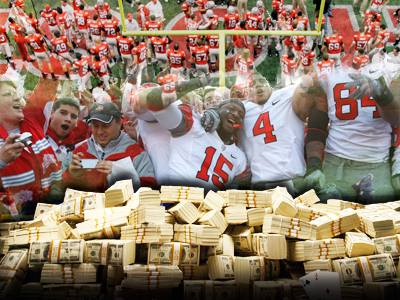
Kory Devon and I discuss the latest happenings in the sports world and try to come to an agreement on whether college athletes should get paid (legally) or not. What do you think? Sound off and let us know in the comments section!

This was actually recorded before podcast #10, so please go back and check out that episode if you’d like to hear a continuation of our discussion.

Click Podcast #11 to listen!

CornerstoneDad Podcast #10 – America The Beautiful, With It’s Hoodies and N-Words

In this episode, I interview my oldest boy Kory Devon on the Trayvon Martin killing. We discuss some of the issues he faces being a young man not far from Trayvon’s age group, whether people should use the “n-word”, and if America can ever get past its problem with race. Parents, if you have a problem with your children hearing such a frank discussion about race, then parental discussion is certainly advised.

Just click HERE to listen to the show.

A Body Enslaved, But A Mind Set on Freedom: A Letter From A Former Slave To His “Master”

In CornerstoneDad’s house, Black History Month is not in February, it is all year. There is never just a month that we watch “Martin Luther The King” videos (as we used to say in my elementary school), Eyes on the Prize or something on American slavery. Sorry, history is history and truth is truth, and those topics should not just be discussed by families with parents who descended from slaves but by ALL families and schools in America if they are truly teaching history.

So while I did not want to write anything on slavery (or MLK) this month, my wife sent me this article that desires attention. An enormous mind-map could be created from the words of this former slave.

I’d love to hear your thoughts as you read the letter that can be found here.

Parents of all people groups should share this tremendous letter with their children to (and the fact that it’s Black History Month is a good excuse if you’ve never tackled racial issues in your family before) give them insight into American slavery. It helps explain:


– Why descendants of slaves in America share the same last name as their slave owner. [Notice both are named Anderson?]

– American slavery’s hierarchy was NOT like biblical slavery and the slaves were not employees. [Notice that Jourdon Anderson speaks of the attempted murder on his life as if this was no big deal or common?]

– The importance that Jourdon Anderson placed on education as obviously, he was a very intelligent man himself. [So not all slaves couldn’t read, write or do arithmetic.]

– How Jourdon overcame the stigma placed on him and his family in the north as people knew they were former slaves.

– How descendants of slaves started on an uneven playing field as they left fleeing for their lives in some cases like Jourdon, they started from nothing in a new location WITH FAMILIES and were never, ever compensated fairly for the work they had done for most of their lives [after 30 years, shouldn’t Jourdon have been retiring by American standards?]

– The faith and knowledge Jourdon had that God was going to judge and was still in control as he wrote, “We trust the good Maker has opened your eyes to the wrongs which you and your fathers have done to me and my fathers, in making us toil for you for generations without recompense” and later said, “Surely there will be a day of reckoning for those who defraud the laborer of his hire.”

Galations 6:7 Do not be deceived: God cannot be mocked. A man reaps what he sows. – 

Ecclesiastes 12:14 For God will bring every deed into judgment, including every hidden thing, whether it is good or evil.

Luke 12:4-5 Do not fear those who can kill the body and afterwards have no more that they can do. But I will warn you whom to fear: fear the One who after He has killed has authority to cast into Hell; yes, I tell you, fear Him.

1 Timothy 1:8-11 8 We know that the law is good if one uses it properly. 9 We also know that the law is made not for the righteous but for lawbreakers and rebels, the ungodly and sinful, the unholy and irreligious, for those who kill their fathers or mothers, for murderers10 for the sexually immoral, for those practicing homosexuality, for slave traders and liars and perjurers—and for whatever else is contrary to the sound doctrine 11 that conforms to the gospel concerning the glory of the blessed God, which he entrusted to me.

(Don’t be mad at me, I didn’t say it, the Bible did…you know, we do claim to be a Christian country and all…right? “One nation, under God…”America…God shed his grace on thee…” and all those other things we learned in school…remember?)

There are many more points that could be brought up, but I’m going to ask that you chime in with a few from what you read.

To me, Joudon Anderson is a true American hero. While he will never have a county, school and other structures built in his honor like slave owners such as the Macomb’s in Michigan, he showed tremendous respect, dignity and wisdom in dealing with his former captor and deceiver.

…and you know, I have a feeling that if ole P.A. Anderson would have offered him the world financially, Mr. Jourdon Anderson still would not have returned “to his old master”.

That’s freedom to die for.

Once Again, And It’s Not Yet Black History Month! – Reason 453 for Why You May Want To Consider Homeschooling Your Kids

Wow, another one of these assignments, so soon after the Georgia story? (See here: http://cornerstonedad.com/2012/01/10/parents-protest-at-school-over-slave-math-lesson-reason-344-for-why-you-may-want-to-consider-homeschooling-your-kids/)

What’s the workbook for teacher workshops these days, the Willie Lynch letter?

Some have rightly argued how could many African-American’s vote for Barack Obama just because he is of their same people group.

How about because many people are tired of the only thing African-Americans are known for is being a slave!

Maybe 30 years from now the assignment will be, “How did it feel to run for president and have people doubt whether you were even born in America?” Or, “Imagine being President and having other political colleagues disrespect you and the position in ways they have never done to any other before, treating you worse than one who was extremely promiscuous and of your same party?”

Well, at least in the report below, I see my high school’s slave auction doesn’t seem quite as bad now.

For those who may feel this isn’t that bad, perhaps you’re right. Maybe we as a society shouldn’t be so sensitive. Maybe next September 11, we can have some students pretend they are jumping out windows or pretend they are held by terrorists and about to get their head’s chopped off.

Yea, that’ll be cool.

Of course, we could always have our Jewish brothers and sisters pretend to starve, be infected with diseases, or how hot it would feel to be in an oven. I’m sure some kids in the class will be German so they can chip in as oppressors (or say they were just following orders).

Oh, that would be a real teaching moment for the kids.

And before you read the article below, please remember there’s no such thing as “biracial”. There aren’t two races of human beings. That’s a topic for another day.

CornerstoneDad’s, read over those school assignments!

Michigan mom slams son’s assignment on slavery

MELVINDALE, Mich. – Jessica Gibson says she won’t let her 11-year-old son complete a school assignment that she says took a lesson about slavery too far.

Gibson, 27, of Melvindale, Mich., said her sixth-grade son, Taylan, received the social studies assignment from a Strong Middle School teacher last month. But her son hid it from her, later telling her he didn’t want to do it. Gibson found out about it last week.

“He’s never had a master nor will he ever have a master, so why should he have to pretend to have a master?” Gibson said. “That really disturbed me.”

The written portion of the assignment asked students to answer five questions, which included describing what the slave area and the plantation area are like and what the owner and his family are like. It also asked students what kind of activities go on at their plantation, whether they have any friends or family at the plantation and whether anything extraordinary has happened in their lives as a slave.

A video portion of the assignment asked students to talk about the life they described in the journal, according to the assignment Gibson shared with the Free Press on Monday.

The teacher, Michelle Angileri, told the Free Press she wasn’t allowed to make any statement and directed a reporter to talk to the principal. The Free Press was unable to reach the principal or district superintendent Monday.

Taylan had been learning about slavery when he got the assignment. He said it embarrassed him.

“I’m black, and it was a slave assignment,” he said.

His mother, who is biracial, said she doesn’t think anyone should be required to complete the assignment, regardless of race.

“For him to pretend to be something he’s never been or never will be, that’s going too far,” she said.

Teaching slavery is a sensitive topic that has sparked controversy before. This month in Atlanta, teachers used slavery themes to teach math concepts, including questions such as: “If Frederick got two beatings per day, how many beatings did he get in one week?”

Last year, teachers in Virginia and Ohio held mock slave auctions in which they had white students auction off black students as part of lessons on the Civil War.

Gibson said she tried talking to school officials about her concerns, but didn’t receive a satisfactory solution and doesn’t want her son to get a zero for not completing the assignment.

“Find a different assignment for them to do,” she said.

Source: http://www.usatoday.com/news/education/story/2012-01-17/michigan-assignment-slavery/52610652/1

Must See TV (or Web Streaming): Black In Latin America

The series began in April 2011 and our family has been catching up on episodes over the last few weeks. Henry Louis Gates Jr. does a phenomenal job exploring the lives of African descendants in Haiti, the Dominican Republic, Cuba, Brazil, Mexico and Peru. Every story goes into the history of how Africans arrived in that country and why those descendants are in the economical and cultural condition they are in today.

Does your family need to watch?

Do YOU need to watch?

Ask yourself and your children a few of the following questions and decide:

– What does my family know about the Trans-Atlantic slave trade?

– Was the United States the only country that imported African slaves?

– If not, did the United States import the most African slaves?

– Why is Haiti so poor?

– Why does baseball bring players from the Dominican Republic and not Haiti when they are right next to each other geographically?

– Why does the United States not have a good relationship with Cuba?

– Why do Brazilians speak Portuguese?

– Why does Brazil consider itself free of racism but not the United States?

– If you are considered an African-American in the United States because of your dark skin, what is someone from Mexico considered if they look just like me?

– If they are considered different, why, and how did it get that way?

There is so much more that can be asked as those only scratch the surface!

Ironically, American’s often speak of the necessity of knowing a second language like so many other nations around the world. However, American’s often want to learn a country’s language in a vacuum, without learning about the country’s culture, it’s people or the history.

Then again, American’s tend to have selective amnesia when it comes to its own history, so I’m really not surprised.

http://www.youtube.com/watch?v=rySn2z0dJSk